



Growing a Love for Outdoor Learning at Garrowhill

Indigo Childcare Group
4 min read
Jun 16 2026
-Written by Kirsty Philips, member of our Outdoor working group and Lead Child Development Officer at Garrowhill ELC
Where It All Began
Hi, I’m Kirsty, and I’m the Outdoor Champion at Garrowhill ELC. My love for the outdoors started when I was little — and yes, I know everyone says their best childhood memories are outside, but honestly, mine truly are.
Growing up, life could feel a bit unpredictable. The outdoors became my safe place. No matter where I was, the ground beneath my feet and the sky above me were always there — solid, reliable, and comforting. Being outside made me feel calm, safe, and grounded.
I spent hours collecting bugs — especially ants and worms — and made tiny homes for them in bottles. I was very serious about creating what I thought was the perfect environment for them. Looking back, I think I just wanted to protect something and create the kind of safe space I needed myself.
Ironically, the only thing that scared me outdoors was climbing. I have many memories of watching everyone else climb trees or fences while I stayed firmly on the ground. The funniest moment has to be the “monkey tree” in Tollcross Park. I climbed about one foot off the ground… and got completely stuck. I cried so much that my dad had to come from home to “rescue” me. When he arrived and realised I was essentially standing on tiptoes, he was not impressed — and I’ve never lived it down. My family still joke that my bed was higher than the tree I was “stuck” in.
Seeing the Need at Garrowhill Nursery
When I started at Garrowhill, I quickly noticed that our garden space was quite small. This made it difficult for children to get vigorous exercise such as running and climbing. However, I spotted a large unused outdoor area and immediately thought: this could be something special.
I knew that many children today don’t have the same outdoor opportunities we had growing up. Some of our families lived in flats, with limited or no access to outdoor play. I wanted to create a safe outdoor learning space that children could access every day — somewhere they could build skills, confidence, and memories.
I shared my ideas with the manager, and together we made a plan. Staff worked as a team to clear the area, and we secured funding for resources. The main challenges we faced were staff confidence and understanding of outdoor learning, particularly how to facilitate it effectively.
We also faced practical issues. Because of vandalism in the area, everything had to be packed away daily. We bought storage boxes, but these were eventually vandalised too — fires were started, locks were broken, and resources were destroyed. It was disheartening and felt like all our hard work had been undone.
Rebuilding Confidence and Skills
Just as things felt at their lowest, Stramash advertised a training opportunity — but places were limited and required an audition. I knew I had to stand out.
So, I got creative. I dressed up as a tree using cardboard boxes, vines, and paint, went into the forest, and answered the audition questions — some of them while climbing trees. It worked, and I secured a place.
The training was incredible. I learned about:
- Den building and knot tying
- Health and safety outdoors
- Fire use
- Growing and planting
- Risky play and its benefits
- Facilitating outdoor experiences
- The principles of outdoor play
Most importantly, it reignited my passion and gave me the confidence to rebuild.
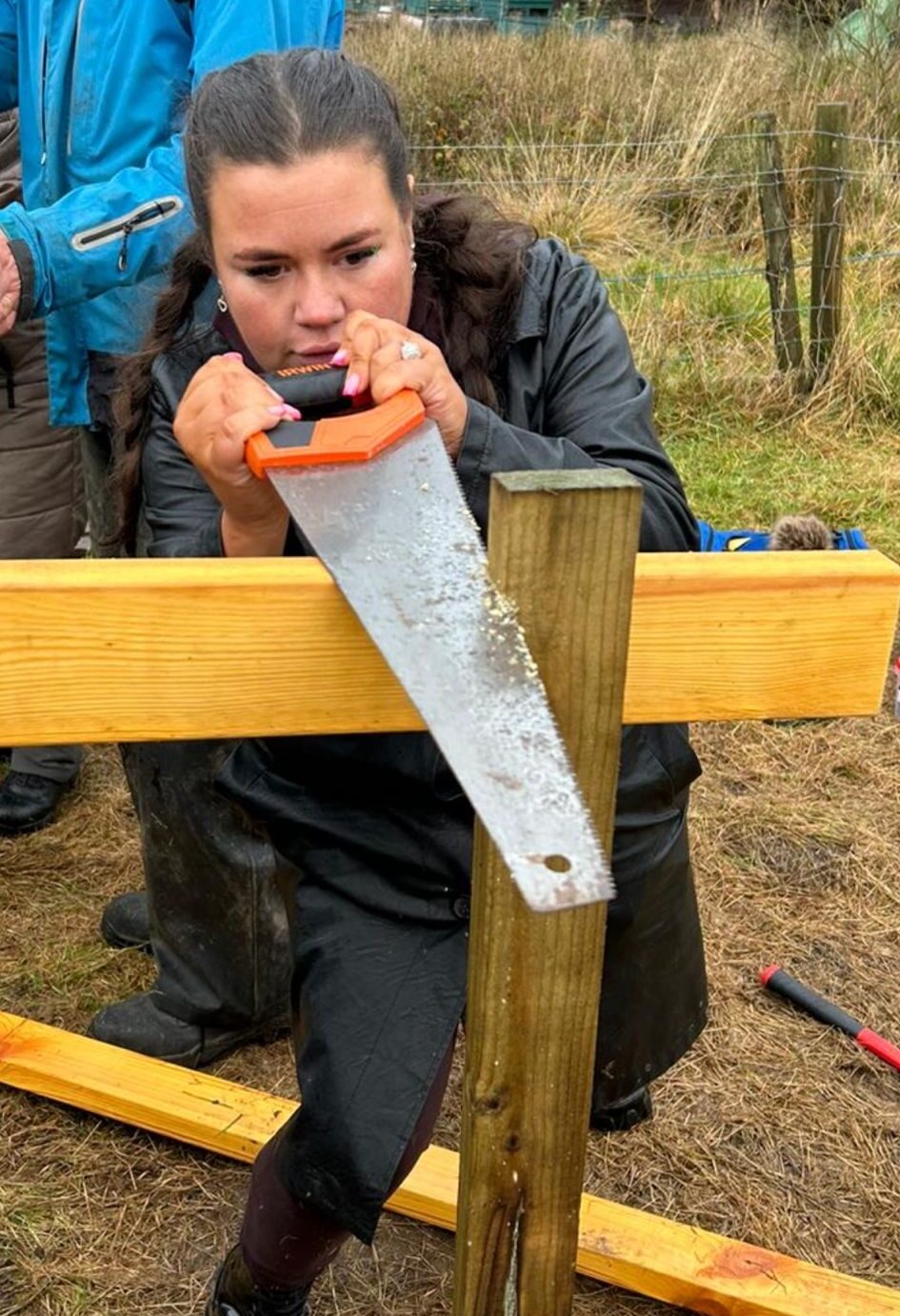
After each session, I brought ideas back to the team and the children. We asked the children what they wanted in their forest, and they were involved from start to finish. Using real tools, they helped build steps, planters, birdhouses, monkey bars, tyre swings and ladders.
I knew some of the team were nervous about risky play, so I introduced it slowly. I spent time supporting staff one‑to‑one, helping them step back and allowing children to assess risk themselves. Over time, the team realised that most children weren’t scared at all — and that they were far more capable than expected.
I showed the team how to support safety without constantly intervening, such as checking trees for thick branches and climbing close to where branches join the trunk.
I also delivered training sessions across our early years services on the benefits of risky play and Sobel’s principles of play, including practical activities in the forest. One particularly powerful activity involved a team member climbing a tree while others observed and recorded how they felt. When they compared notes, it became clear: the fears of those watching were very different from the feelings of those climbing.
I also led an in‑service session on linking outdoor play to children’s curriculum trackers. This helped the team see that outdoor learning was actually full of valuable evidence that could contribute to the tracking of children’s learning. The team now regularly use this approach to plan meaningful outdoor experiences.
The Impact
The impact has been huge.
Most of the team is now confident in supporting and delivering risky play. Children have become more resilient, physically confident, and emotionally secure. The forest is now a permanent part of the daily routine for children in the street playroom, giving them access to meaningful outdoor experiences every day.
When comparing children who accessed the forest daily with those who didn’t, the differences in confidence, resilience, and emotional regulation were clear. This led to a rota being created so that children in the 3–5 room could also access the forest regularly.
Most of the team now love visiting the forest (most of them!) and feel confident in linking natural outdoor experiences to learning outcomes and trackers.
Reflections
I’m incredibly proud of what we achieved.
Sharing my knowledge across services, watching the team and children grow in confidence — and growing in confidence myself — made me realise that I can turn ideas into reality. Knowing that something I helped create is now embedded in our setting is an amazing feeling.
The best part of risky play is witnessing those tiny moments: a child climbing a bit higher, being brave enough to try something new, or getting onto the tyre swing for the first time all by themselves. Seeing children believe in themselves, little by little, is pure magic.
In many ways, it feels like I’m doing for children what I tried to do for those bugs when I was little — creating a safe space where they can explore, grow, and feel secure. And honestly, there’s no better feeling than that.
-

Families reported feeling valued and understood.
-
Families gained a sense of community and felt less alone.
-
Parents and carers described stronger bonds with their children.
-
Families felt more confident in parenting Autistically.