




Top tips for Early Sentence Users

Indigo Childcare Group
3 min read
Jun 3 2025
Is your child at the stage of putting together short sentences (3 – 5 words)? Try these top tips to continue to improve their language and communication.
Follow Your Child’s Lead
Enjoy fun activities together, including your child’s interests. Whatever your child enjoys doing can be used as an opportunity to build language and communication. Join in the play your child’s way. Comment on what your child is doing.
Model Short Sentences
Interpret what your child wants to communicate by her actions and words, and put this into very short sentences that are easy for your child to copy.
Expand Sentences
If your child is frequently using sentences, expand your child’s language by repeating back what they say and adding a word or idea to make a slightly longer sentence, for example if your child says ‘the bus is coming’, you could repeat back ‘the big bus is coming’ or if your child says ‘the playdough is squishy’, you could repeat back ‘the playdough is squishy and stretchy’.
Build Vocabulary
Build your child’s vocabulary modelling lots of object names for things they use every day and are interested in. Don’t forget fun action words – action words are important for building sentences (for example play, catch, dance, fall, eat, drink).
People Play
Do you know the best activities for early interaction that only need you?
- Peekaboo
- Tickles
- Chasing
- Hide and Seek
Tickly rhymes such as:
- ‘Round the garden’
- ‘This little piggy’
- ‘Cross cross line line’
Movement rhymes such as:
- Row, row, row your boat
- Ring a roses
- Sleeping Bunnies
Pause at the high points of the play to give your child opportunities to show enjoyment and anticipation. Pause at the end to let your child show they want to repeat the game. Use predictable, repetitive language that your child can join in.
Use visual information as you talk
Show your child what you mean using visual information as you talk, such as holding up objects, pointing, using gestures and pictures. Using Makaton signs is a great way to build language and communication.
Share songs and rhymes
Share songs and rhymes with your child — songs with actions (like Head, Shoulders, Knees and Toes) or with lots of repetition and fun sounds (like Old McDonald or Wheels on the Bus) are great for encouraging young children to join in.
Share Stories
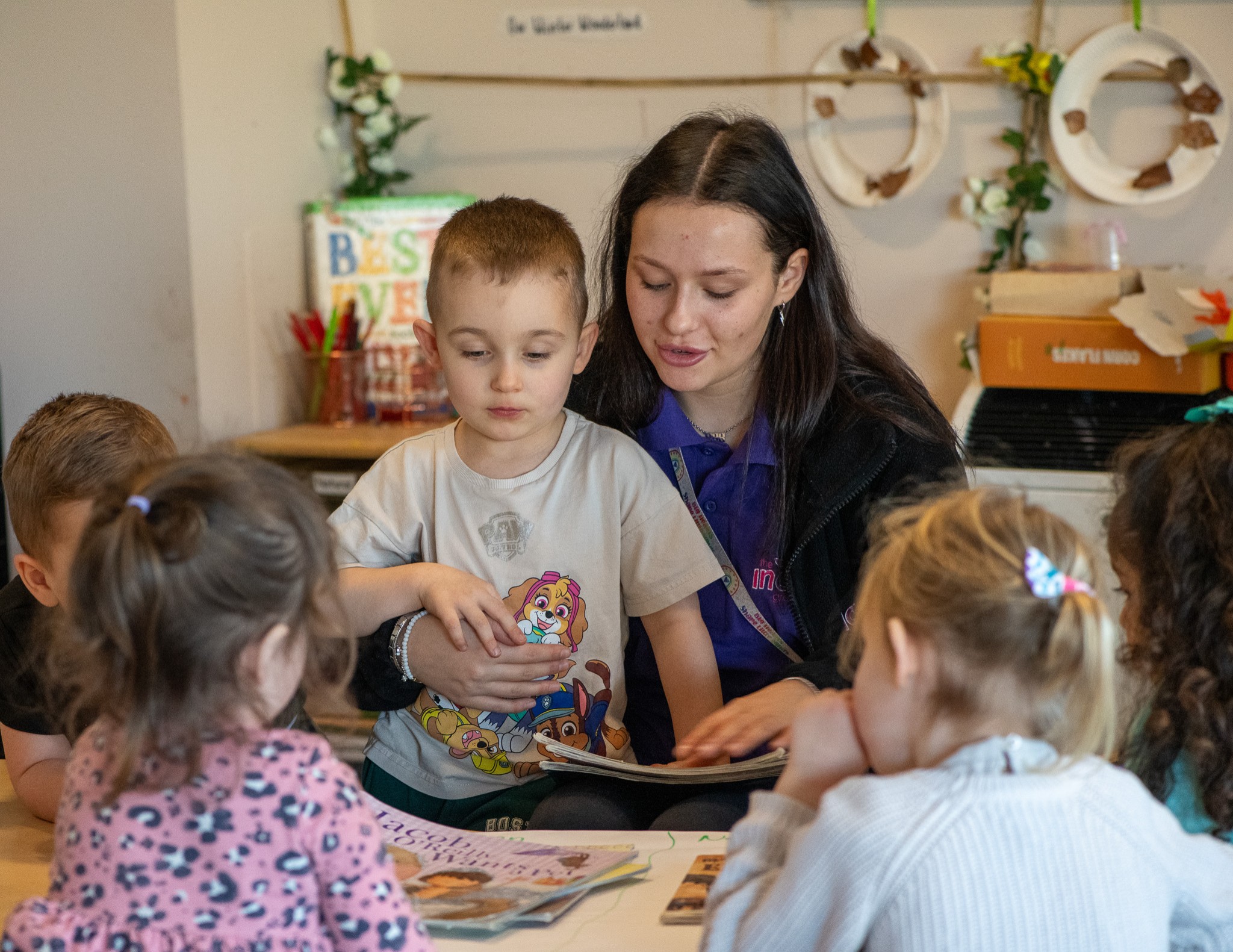
Interactive books, such as ones you can touch and feel, lift-the-flap, or books with buttons, can be great to capture little ones’ interest and take turns.
Chat about the pictures using single words and short phrases, and encourage your child to point at the pictures.
Support Understanding
Children may need time to think before responding to questions and instructions. Give your child time without answering for them. Support understanding by breaking longer instructions down. Support spoken instructions with visual information such as pointing and gestures.
Support Speech Sounds
If your child mixes up or misses out some sounds in words, simply repeat back the correct version of the word for your child to hear. Modelling speech and language while following your child’s lead works better than putting pressure on your child to correct what they are saying or say sounds they might not be ready for yet.
Support Phonological Awareness
Listening out for rhythms, sounds and rhymes is a great way to get your child ready for literacy.
Why not try clapping along to the beat of a song or using musical instruments to bang or shake out the beat?
Nursery Rhymes – say rhymes and songs together with your child.
Pause to let your child fill in the words and talk about which words sound the same (rhyme).
Loving language
-

Get face-to-face and on your child’s level, when interacting, try to minimise distractions such as screens.
-
Observe, Wait & Listen to see what has caught your child’s interest and what they are trying to communicate
-
Follow Your Child’s Lead. Enjoy fun activities together, including your child’s interests. Whatever your child enjoys doing can be used as an opportunity to build language and communication. Join in the play your child’s way. Comment on what your child is doing using short, simple sentences. When your child uses language, repeat their words and expand by adding a word.
For more ideas of fun activities to try to build speech, language and communication, see the BBC Tiny Happy People website.
